How to Increase Restaurant Revenue Without Adding More Covers
Discover practical strategies to increase restaurant revenue without expanding your dining space. Learn how UK restaurants can boost average order value, encourage repeat visits, reduce commission costs, automate marketing, and improve profitability using modern restaurant technology.
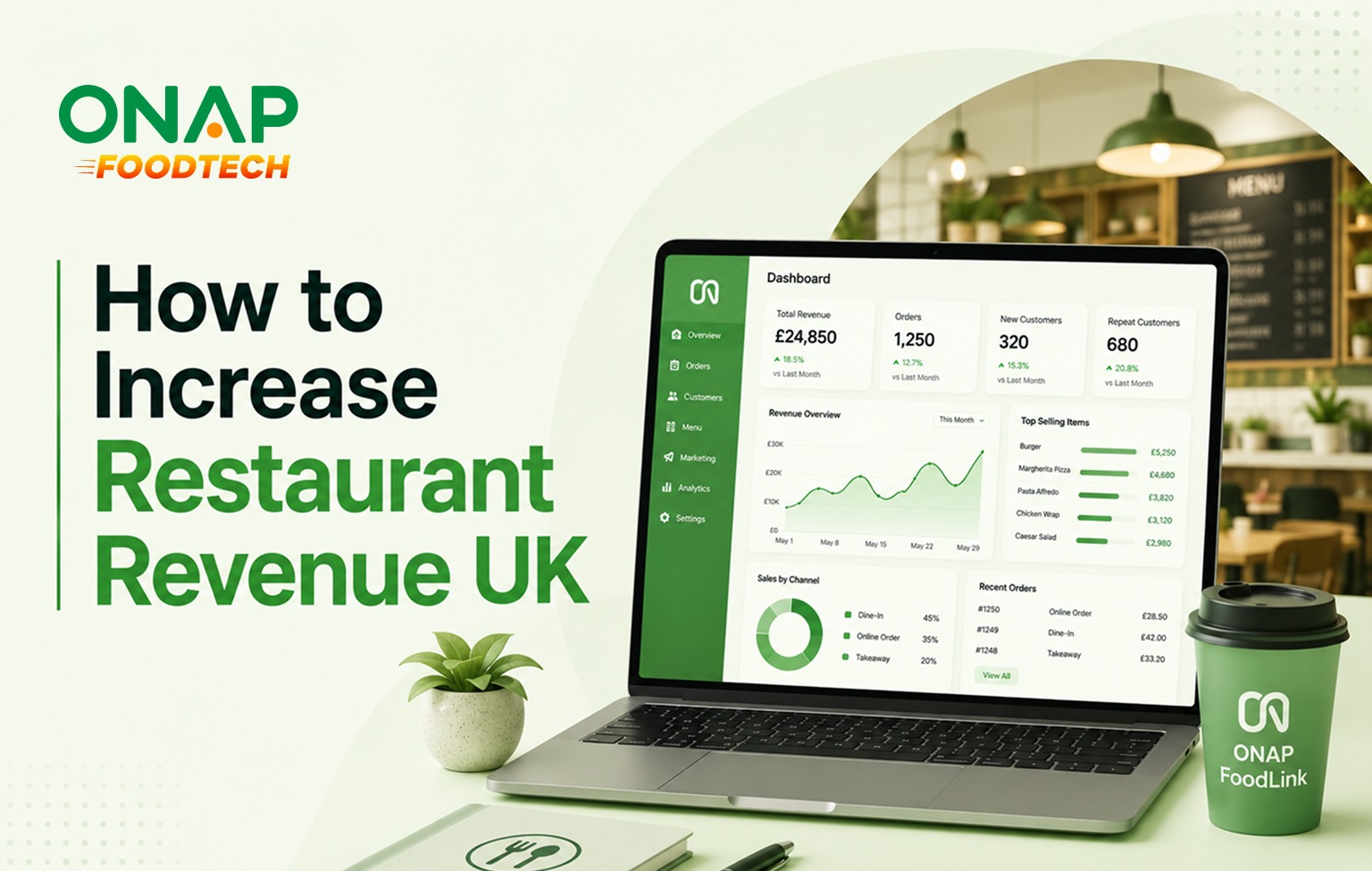
How to Increase Restaurant Revenue Without Adding More Covers
Many restaurant owners assume revenue growth depends on serving more customers. That often leads to expensive renovations, larger premises, or squeezing extra tables into already busy dining areas. In reality, adding more covers is only one way to grow a restaurant. For many UK businesses, it is also the most expensive option.
A more sustainable approach is to generate more revenue from the customers you already attract. Increasing average order value, improving customer retention, reducing third-party commission fees, and making better use of operational data can all improve profitability without increasing seating capacity.
Modern restaurant technology plays an important role in this shift. Integrated ordering systems, customer relationship management (CRM), loyalty programmes, and analytics help restaurants identify opportunities that are difficult to spot using manual processes alone. This guide explores eight practical strategies that UK restaurants can implement to increase revenue while making existing operations more efficient.
Why Adding More Tables Is Not Always the Answer
Adding seating sounds like the quickest route to higher revenue, but it often creates new challenges.
More tables mean:
- Higher staffing costs
- Greater kitchen pressure
- Longer waiting times
- Increased rent or refurbishment costs
- More inventory requirements
- Reduced customer comfort if space becomes crowded
Even if extra tables are available, they only generate revenue when demand consistently exceeds capacity. Many restaurants experience busy evenings followed by quieter weekday periods, meaning additional seating remains unused for much of the week. Rather than investing heavily in expansion, many successful operators focus on increasing revenue per customer.
Small improvements such as increasing average spend by a few pounds, encouraging one extra visit per customer each month, or converting marketplace orders into direct online orders can have a significant impact over the course of a year. Revenue growth becomes more predictable because it relies on improving existing customer relationships rather than continually finding new customers.
Tactic 1, Increase Average Order Value With Smart Menu Design
One of the fastest ways to increase restaurant revenue is to encourage customers to spend slightly more during each visit. Average Order Value (AOV) measures the average amount customers spend per transaction. Even modest improvements can produce meaningful revenue growth across hundreds or thousands of monthly orders. Menu design has a major influence on purchasing decisions.
Consider these techniques:
- Highlight high-margin dishes using visual emphasis.
- Group profitable items into chef's recommendations.
- Offer premium upgrades for sides or drinks.
- Create value-focused meal bundles.
- Position best-selling dishes where customers naturally look first.
- Use appetising descriptions that communicate quality.
Digital ordering platforms make these strategies even more effective by automatically recommending complementary products during checkout.
For example:
| Main Order | Suggested Upgrade |
|---|---|
| Pizza | Garlic bread and dessert |
| Burger | Fries and milkshake combo |
| Pasta | Garlic bread and premium drink |
| Coffee | Fresh pastry |
Customers appreciate relevant recommendations when they improve the dining experience rather than feeling like aggressive sales tactics. Restaurants using integrated ordering platforms can automate these upsell suggestions across takeaway, delivery, and collection orders without relying on staff to remember every opportunity.
Tactic 2, Turn First-Time Diners Into Regulars With a Loyalty Programme
Attracting new customers is expensive. Between advertising, marketplace commissions, promotional offers, and social media campaigns, acquiring a first-time diner often costs far more than encouraging an existing customer to return. That is why customer retention is one of the biggest drivers of long-term restaurant revenue. A well-designed loyalty programme gives customers a reason to choose your restaurant again instead of trying somewhere new. The reward does not need to be large. Consistency and simplicity matter more than generous discounts.
Popular loyalty models include:
- Points earned on every purchase
- Free items after a certain number of visits
- Birthday rewards
- Exclusive offers for members
- Early access to seasonal menus
- Referral rewards for bringing in new customers
The goal is to create repeat purchasing behaviour rather than occasional discount-driven visits.
For example, a customer who earns points with every online order is more likely to place their next order directly with your restaurant instead of browsing multiple delivery apps. Loyalty programmes also generate valuable customer data. Restaurants can see how frequently customers visit, how much they typically spend, and which menu items they order most often. Those insights can then be used to create more personalised marketing campaigns.
Restaurants using integrated platforms such as ONAP FoodTech can combine loyalty rewards with online ordering, customer profiles, and automated marketing instead of managing separate systems. A simple loyalty programme that encourages just one additional visit every couple of months can generate significantly more lifetime value than constantly chasing new customers.
Tactic 3, Add a Direct Online Ordering Channel and Cut Commission Fees
Third-party delivery platforms have helped many UK restaurants expand their reach, but relying on them for every online order can reduce profitability. Commission fees on each order eat into already tight margins. While these platforms remain useful for attracting new customers, they should not become the only source of online sales. A direct online ordering system allows customers to order through your own website or branded mobile app. Instead of paying commission on every repeat order, you retain more revenue while strengthening your relationship with customers.
Owning your ordering channel provides several advantages:
- Lower commission costs
- Greater control over pricing and promotions
- Full ownership of customer data
- Better branding throughout the ordering journey
- Opportunities to build loyalty and repeat business
Many successful restaurants use a balanced strategy.
Delivery marketplaces help introduce the brand to new customers, while packaging inserts, QR codes, loyalty rewards, and exclusive offers encourage those customers to order directly next time.
Here are a few practical ideas to increase direct orders:
- Include QR codes inside takeaway packaging
- Offer loyalty points only on direct orders
- Create exclusive online meal deals
- Give returning customers a discount on their next website order
- Promote direct ordering across social media and email campaigns
Restaurants planning to launch their own ordering platform can explore the ONAP FoodTech features to understand how integrated ordering, loyalty, CRM, and operational tools work together within a single system.
Tactic 4, Use Customer Data to Re-Engage Lapsed Customers
Every customer interaction creates useful information. Order history, visit frequency, favourite dishes, spending habits, and preferred ordering methods all provide valuable insight into customer behaviour. Unfortunately, many restaurants collect this data without ever using it. Customer data becomes most valuable when it helps bring previous diners back. For example, if a regular customer has not placed an order for eight weeks, an automated message with a personalised offer may encourage them to return. Someone who frequently orders pizza might appreciate being notified when a new pizza special is introduced, while families who usually visit on Sundays may respond better to a weekend meal bundle.
Segmenting customers allows restaurants to send more relevant promotions instead of broadcasting the same discount to everyone.
| Customer Segment | Example Campaign |
|---|---|
| No orders for 60 days | "We've missed you. Enjoy 15% off this weekend." |
| Frequent takeaway customer | Free delivery on your next direct order |
| High-spending diners | Invitation to an exclusive tasting event |
| Birthday customers | Complimentary dessert or drink |
| Weekend family visitors | Sunday family meal promotion |
Personalised marketing generally produces better engagement because customers receive offers that match their previous behaviour. Using a restaurant CRM or integrated management platform makes this process largely automatic, reducing manual work while improving campaign effectiveness.
Tactic 5, Automate Marketing With WhatsApp and SMS Campaigns
Marketing often slips down the priority list once service begins. Managers focus on customers in the restaurant, kitchen operations, staffing, and supplier deliveries, leaving little time to plan regular campaigns. Automation solves this problem. Instead of manually sending promotions each week, restaurants can schedule campaigns that are triggered by customer behaviour or specific dates. Messages arrive at the right time without requiring constant attention from staff.
Effective automated campaigns include:
- Welcome messages after a customer's first order
- Birthday rewards
- Loyalty milestone notifications
- Seasonal menu launches
- Limited-time promotions
- Reservation reminders
- "We miss you" campaigns for inactive customers
WhatsApp has become an increasingly valuable communication channel because many customers check messages more quickly than email. SMS also remains effective for time-sensitive offers such as lunch specials or same-day promotions. The most successful campaigns are personalised rather than generic.
For example:
- A customer who regularly orders every Friday could receive a reminder after missing two consecutive weeks.
- Someone who frequently orders vegetarian dishes could be notified when a new plant-based menu item becomes available.
- A family that usually orders on weekends could receive an exclusive Sunday bundle offer.
Automation also ensures consistency. Marketing continues even during busy trading periods, helping restaurants generate repeat business without increasing administrative workload. When marketing tools are connected with customer data, loyalty programmes, and online ordering, every campaign becomes more relevant and measurable.
Tactic 6, Upsell and Cross-Sell at the Point of Order
Another effective way to increase revenue is by encouraging customers to add complementary items to their order. Unlike attracting new customers, upselling focuses on increasing the value of purchases that are already happening. The most successful recommendations feel helpful rather than sales-driven.
Examples include:
- Suggesting garlic bread with pizza
- Recommending premium drinks instead of standard soft drinks
- Offering desserts before checkout
- Promoting family meal bundles
- Adding sauces or extra toppings
Modern ordering software can present these recommendations automatically during the checkout process.
For example:
| Customer Order | Suggested Add-on |
|---|---|
| Burger | Upgrade to a meal with fries and drink |
| Pizza | Garlic bread and dessert |
| Curry | Naan bread and soft drink |
| Coffee | Fresh pastry |
| Family meal | Extra sides or children's desserts |
Restaurants should also analyse purchasing patterns. If customers frequently order two products together, those combinations can become automatic recommendations across online ordering channels. Meal bundles provide another opportunity to increase average spend while delivering better perceived value. Instead of selling individual items separately, offer carefully designed combinations that benefit both the customer and the restaurant. Small increases in average order value across hundreds of weekly transactions can generate substantial additional annual revenue.
Tactic 7, Reduce Food Waste to Protect Margins
Increasing revenue is only half of the profitability equation. Restaurants also need to protect the revenue they already generate. Food waste remains one of the largest hidden costs in hospitality. Ingredients that expire before use, oversized portions, inaccurate purchasing, and poorly performing menu items all reduce profit margins.
Reducing waste starts with better visibility.
Restaurant reporting can help managers identify:
- Slow-selling dishes
- Seasonal demand patterns
- Ingredient consumption
- Inventory turnover
- Popular menu combinations
- Portion consistency
Armed with this information, restaurants can make smarter purchasing decisions instead of relying purely on instinct.
Practical ways to reduce waste include:
- Reviewing menu performance every month
- Removing consistently underperforming dishes
- Standardising recipes and portion sizes
- Forecasting demand using historical sales
- Rotating stock correctly using FIFO principles
- Purchasing ingredients based on actual demand rather than estimates
Technology makes this easier by bringing together sales reports, inventory data, and ordering trends into one system. Protecting margins often produces faster financial improvements than increasing customer numbers because every pound saved contributes directly to profitability.
Tactic 8, Analyse Peak Hours and Optimise Staffing Costs
Labour is one of the largest operating costs for any restaurant. Scheduling too many employees during quiet periods increases costs unnecessarily. Scheduling too few during busy periods affects customer service, increases waiting times, and limits revenue opportunities. Understanding demand patterns allows managers to match staffing levels with customer activity.
Useful operational reports include:
- Peak ordering hours
- Table occupancy by day and time
- Collection and delivery trends
- Kitchen preparation times
- Average service times
- Staff productivity
- Revenue by trading period
For example, if online takeaway orders consistently peak between 6:00 pm and 8:00 pm every Friday, managers can schedule additional kitchen staff during those hours while reducing labour during quieter afternoon periods.
The same data may reveal opportunities to increase sales. If Tuesday afternoons regularly have spare kitchen capacity, targeted promotions can encourage more customers to order during those quieter periods without increasing fixed operating costs. Restaurants using integrated reporting tools gain a clearer understanding of customer behaviour and operational performance, making staffing decisions more accurate and helping maximise profitability throughout the week.
How ONAP FoodTech Supports Revenue Growth
The strategies covered in this guide are most effective when they work together. A loyalty programme delivers greater value when it's connected to customer data. Direct online ordering becomes more profitable when combined with automated marketing. Operational reporting is more useful when it includes sales, customer behaviour, and order trends in one place. Managing each of these areas through separate tools often creates unnecessary complexity. Staff spend time switching between systems, exporting spreadsheets, and manually updating customer information.
ONAP FoodTech brings these functions together within a single restaurant management platform, helping operators streamline daily operations while creating more opportunities to grow revenue.
Key capabilities include:
- Direct online ordering through your own branded website
- Customer CRM with complete order history
- Loyalty programme management
- WhatsApp and SMS marketing automation
- Digital menu management
- Order tracking and kitchen workflow tools
- Business reporting and performance analytics
- Payment integrations and operational dashboards
Restaurants considering a modern technology stack can explore the ONAP FoodTech platform to understand how these tools work together. Businesses comparing solutions may also find the FoodTech pricing page useful when evaluating implementation costs and available features. Technology alone does not increase revenue, but it gives restaurant owners better visibility, stronger customer relationships, and the operational efficiency needed to make informed business decisions.
Frequently Asked Questions
How can a restaurant increase revenue without expanding?
The most effective methods include increasing average order value, encouraging repeat visits through loyalty programmes, introducing direct online ordering, automating customer marketing, reducing food waste, and improving operational efficiency. These strategies increase profitability without requiring additional seating capacity.
What is the fastest way to increase restaurant revenue?
Improving average order value is often one of the quickest opportunities. Menu engineering, meal bundles, and relevant upsell recommendations can increase customer spending immediately without attracting additional diners.
Is a direct online ordering system worth it for UK restaurants?
For many restaurants, yes. A direct ordering channel reduces reliance on third-party delivery commissions, strengthens customer relationships, and provides access to valuable customer data that can support future marketing campaigns.
Does customer loyalty software increase repeat business?
A well-designed loyalty programme encourages customers to return more frequently by rewarding repeat purchases. When combined with personalised marketing and direct ordering, loyalty software can significantly improve customer lifetime value.
How can restaurant data improve profitability?
Sales reports and customer insights help restaurants identify popular menu items, peak trading periods, repeat purchasing behaviour, and operational inefficiencies. These insights support better staffing decisions, targeted promotions, and smarter purchasing.
Conclusion
A modern platform should combine online ordering, CRM, loyalty management, payment integration, marketing automation, reporting, menu management, and operational dashboards. Having these features in one system reduces manual work and provides a clearer view of business performance. Restaurant revenue growth rarely comes from a single change. It is usually the result of multiple improvements that strengthen customer retention, increase average spend, improve operational efficiency, and reduce unnecessary costs.
Start by identifying the biggest opportunity within your business. It may be introducing a loyalty programme, launching a direct ordering channel, improving menu design, or making better use of customer data. Measure the impact, refine the process, and build from there. As your restaurant grows, having connected systems becomes increasingly valuable. Bringing together ordering, customer management, marketing, and reporting helps create a more efficient operation while giving you the information needed to make confident business decisions.
Explore More Blogs
Discover more expert insights, software guides, and industry best practices to help your business grow with ONAP.
How to Launch a Branded Restaurant App Without a Developer (UK Guide 2026)
Launching a branded restaurant app no longer requires an in-house development team. This 2026 UK guide explains how restaurant owners can choose a no-code or managed app platform, connect ordering and payments, build loyalty features, publish the app, and avoid the common mistakes that make app projects expensive.
Field Service Engineer Scheduling Software UK: Free vs Paid Options Compared
Field service engineer scheduling software helps UK contractors assign jobs, manage availability, track engineers and keep customers updated. This guide compares free scheduling tools, spreadsheets and paid field service platforms, including their features, limitations, costs and suitability for growing teams.
Café vs Cloud Kitchen vs Dark Kitchen: Which Model Works Best for UK Food Businesses
Cafés, cloud kitchens and dark kitchens each suit different UK food businesses. This guide compares premises, staffing, startup costs, delivery economics, customer acquisition, technology, VAT and growth potential, helping operators choose the model that fits their menu, target market and available capital.